A high-quality knife set is the foundation of any well-equipped kitchen. Professional chefs and home cooks alike understand that precision, comfort, and durability make all the difference when preparing meals. The right knife set not only enhances your cooking experience but also improves safety and efficiency in the kitchen. In this comprehensive guide, we’ll compare the top 10 high-quality knife sets available today, examining their blade materials, handle ergonomics, included pieces, and overall value to help you make an informed decision for your culinary needs.
Top 10 High-Quality Knife Sets Comparison
| Knife Set | Blade Material | Handle Type | Number of Pieces | Price Range | Rating |
| Zwilling J.A. Henckels Professional S 7-Piece | High-Carbon Stainless Steel | Polymer | 7 | $350-$429 | 4.8/5 |
| Shun Classic 5-Piece Starter Block | VG-MAX Steel with Damascus Pattern | Pakkawood | 5 | $400-$595 | 4.7/5 |
| Wüsthof Classic Ikon 6-Piece | High-Carbon Stainless Steel | Polymer | 6 | $340-$485 | 4.6/5 |
| Global 7-Piece Takashi | Cromova 18 Steel | Stainless Steel (Dimpled) | 7 | $400-$600 | 4.6/5 |
| Victorinox Classic 8-Piece | High-Carbon Stainless Steel | Fibrox | 8 | $245-$255 | 4.5/5 |
| Suisin Inox 2-Piece Set | Inox Steel | Composite Wood | 2 | $150-$200 | 4.5/5 |
| Tojiro DP Damascus 3-Piece | VG-10 Damascus Steel | Composite | 3 | $180-$250 | 4.4/5 |
| Mercer Culinary Genesis 6-Piece | High-Carbon German Steel | Santoprene | 6 | $139-$182 | 4.3/5 |
| Henckels International Statement 12-Piece | Stainless Steel | ABS Plastic | 12 | $87-$120 | 4.2/5 |
| Cangshan Thomas Keller Signature 3-Piece | Swedish Damasteel | Walnut Wood | 3 | $270-$300 | 4.2/5 |
Editor’s Choice: Zwilling J.A. Henckels Professional S 7-Piece
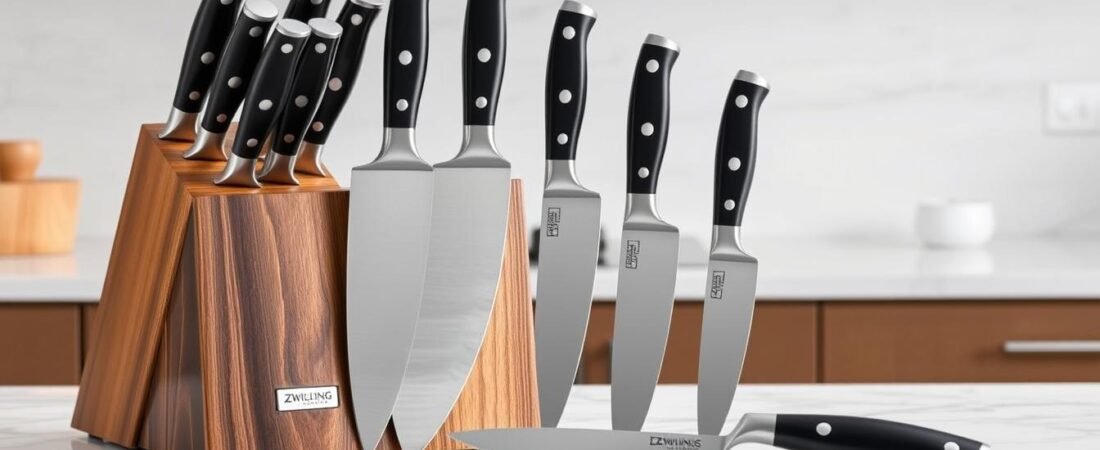
With over 280 years of knife-making expertise, Zwilling delivers exceptional quality in their Professional S 7-Piece knife set. This comprehensive collection includes all the essential knives needed for everyday cooking: an 8-inch chef’s knife, 4-inch paring knife, 5.5-inch utility knife, and 8-inch bread knife. The set also includes kitchen shears, a honing rod, and an attractive hardwood block with additional slots for future expansion.
- Exceptional blade sharpness and edge retention
- Perfect balance and comfortable grip
- Precision-forged from a single piece of high-carbon stainless steel
- Includes all essential knives for everyday cooking
- Block has extra slots for expansion
- Premium price point
- Chef’s knife has a particularly curved blade that may take adjustment
- Kitchen shears are adequate but not exceptional
What makes this set our Editor’s Choice is the perfect balance of quality, versatility, and value. The high-carbon stainless steel blades hold their edge exceptionally well, while the ergonomic polymer handles provide a secure, comfortable grip even when wet. The precision-forged construction ensures excellent balance and durability, making these knives a pleasure to use for years to come.
Shun Classic 5-Piece Starter Block
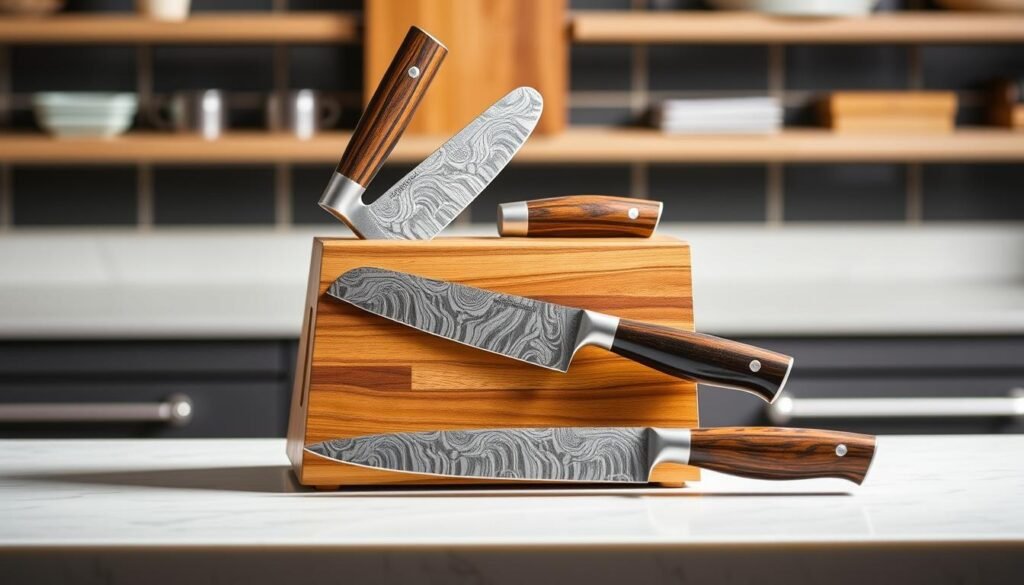
The Shun Classic 5-Piece Starter Block represents Japanese knife-making at its finest. Each knife features a VG-MAX steel core with 68 layers of Damascus cladding, creating the distinctive rippled pattern and exceptional edge retention. The set includes an 8-inch chef’s knife, 6-inch utility knife, and 3.5-inch paring knife, along with a honing steel and an elegant acacia wood block with space for expansion.
- Exceptionally sharp VG-MAX steel blades
- Beautiful Damascus pattern with 68 layers
- Comfortable D-shaped Pakkawood handles
- Superior edge retention
- Handcrafted in Japan
- Higher price point
- No bread knife included
- Requires careful maintenance
Wüsthof Classic Ikon 6-Piece Knife Set
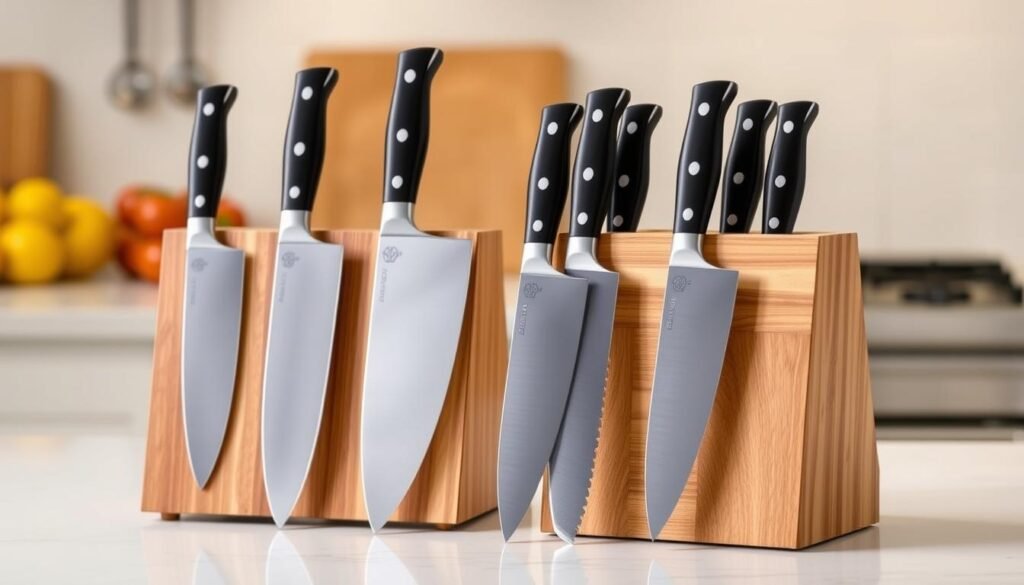
Wüsthof’s Classic Ikon 6-Piece set exemplifies German precision engineering with its forged high-carbon stainless steel blades and distinctive contoured handles. This set includes an 8-inch chef’s knife, 3.5-inch paring knife, 6-inch utility knife, 8-inch bread knife, kitchen shears, and a honing rod, all housed in an elegant acacia wood block.
- Precision-forged from a single piece of steel
- Ergonomic handle design reduces fatigue
- Full tang construction for perfect balance
- PEtec edge technology for superior sharpness
- Comprehensive set with all essential knives
- Premium price point
- Heavier than Japanese alternatives
- Requires regular honing to maintain edge
Global 7-Piece Takashi Knife Set
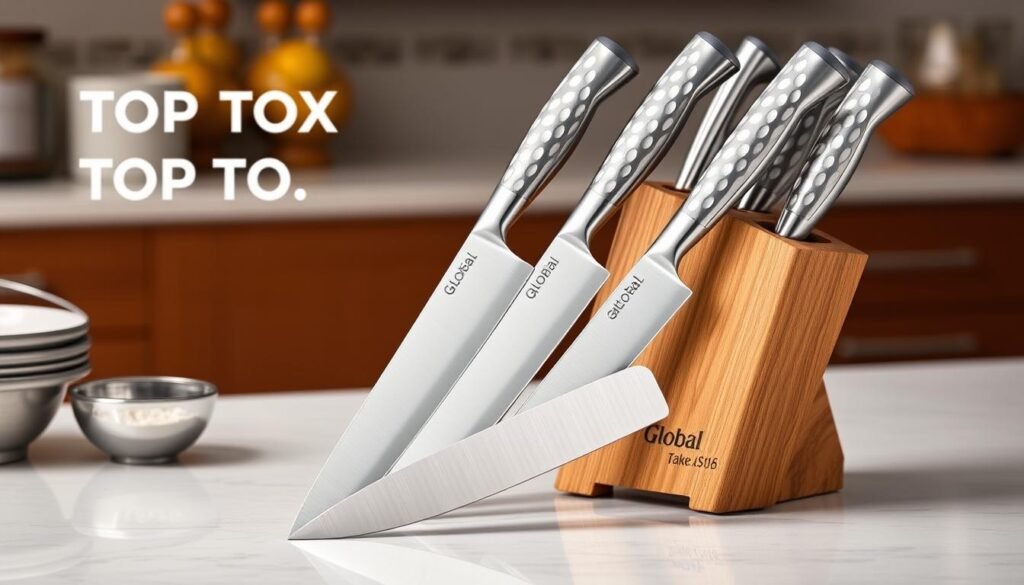
Global knives stand out with their unique one-piece stainless steel construction and distinctive dimpled handles. The 7-Piece Takashi set includes an 8-inch chef’s knife, 5.5-inch vegetable knife, 4.5-inch utility knife, 3.5-inch paring knife, 8.5-inch bread knife, ceramic sharpening rod, and a stylish stainless steel and bamboo block.
- Unique one-piece stainless steel construction
- Extremely lightweight and well-balanced
- Razor-sharp Cromova 18 steel blades
- Hollow handles filled with sand for perfect balance
- Modern, sleek aesthetic
- Dimpled handles may not suit all hand sizes
- No kitchen shears included
- Higher price point
Victorinox Classic 8-Piece Knife Set
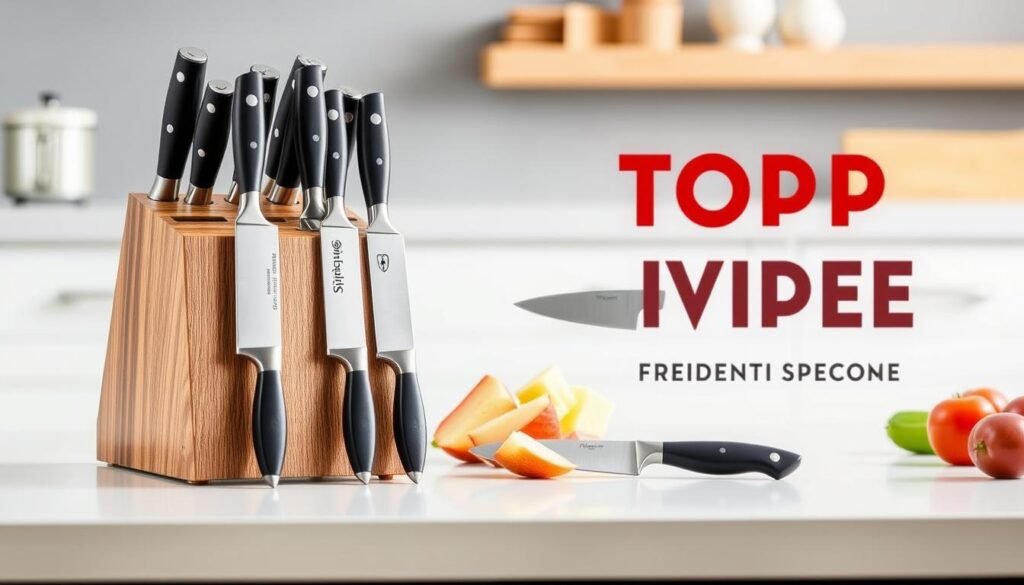
From the makers of the Swiss Army Knife, the Victorinox Classic 8-Piece set delivers professional-grade performance at a more accessible price point. This comprehensive set includes an 8-inch chef’s knife, 10-inch slicing knife, 8-inch bread knife, 6-inch boning knife, 3.25-inch paring knife, honing steel, kitchen shears, and a hardwood block.
- Exceptional value for money
- Lightweight and easy to handle
- Fibrox handles provide excellent grip when wet
- Comprehensive set with specialized knives
- NSF certified for professional kitchen use
- Stamped rather than forged blades
- Utilitarian appearance
- Knives don’t sit perfectly straight in the block
Suisin Inox 2-Piece Knife Set
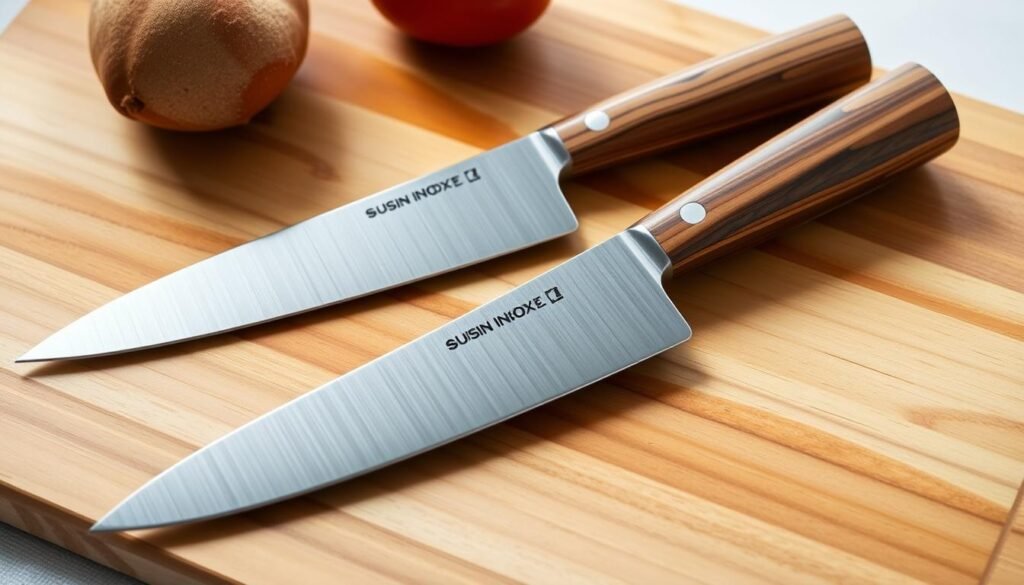
For those who prefer quality over quantity, the Suisin Inox 2-Piece set offers exceptional Japanese craftsmanship. This minimalist set includes an 8.2-inch gyuto (chef’s knife) and a 3.1-inch paring knife, both featuring ultra-thin, razor-sharp Inox steel blades and traditional wooden handles. Despite having fewer pieces, these knives can handle 80% of kitchen tasks with precision and ease.
- Ultra-thin, razor-sharp blades
- Exceptional edge retention
- Lightweight and perfectly balanced
- Easy to sharpen and maintain
- Stain-resistant Inox steel
- Only includes two knives
- No storage block included
- Requires proper care and maintenance
Tojiro DP Damascus 3-Piece Knife Set
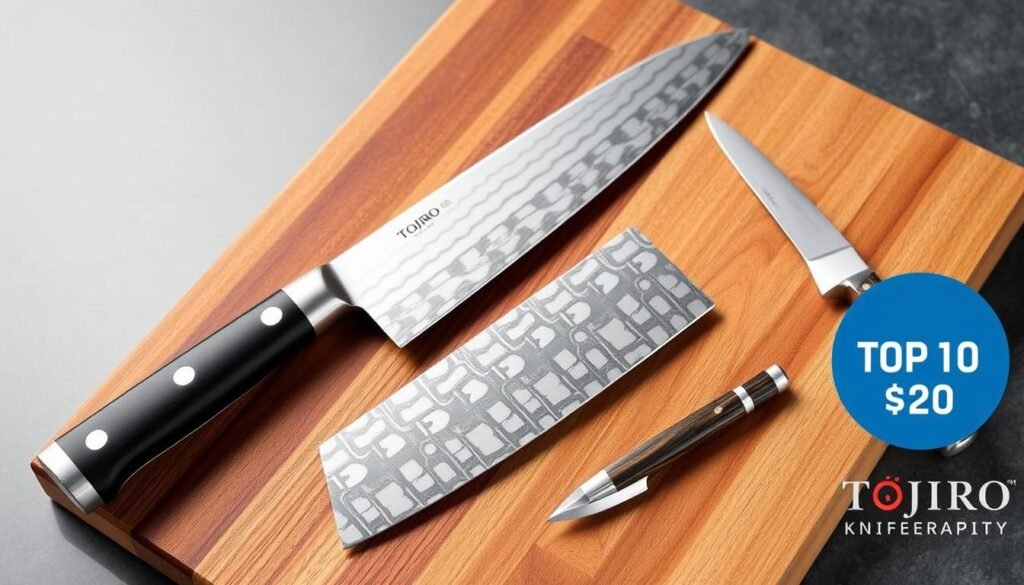
Tojiro’s DP Damascus 3-Piece set combines Japanese blade technology with Western-style handles for the best of both worlds. This set includes an 8.2-inch gyuto (chef’s knife), a 6-inch utility knife, and a 3.5-inch paring knife. Each features a VG-10 core with 37 layers of Damascus cladding, creating a beautiful ripple pattern and exceptional cutting performance.
- VG-10 core with excellent edge retention
- Beautiful 37-layer Damascus pattern
- Western-style handles familiar to most users
- Excellent value for Damascus steel knives
- Stain-resistant cladding
- No bread knife included
- No storage block
- Handles lack some refinement
Mercer Culinary Genesis 6-Piece Knife Set
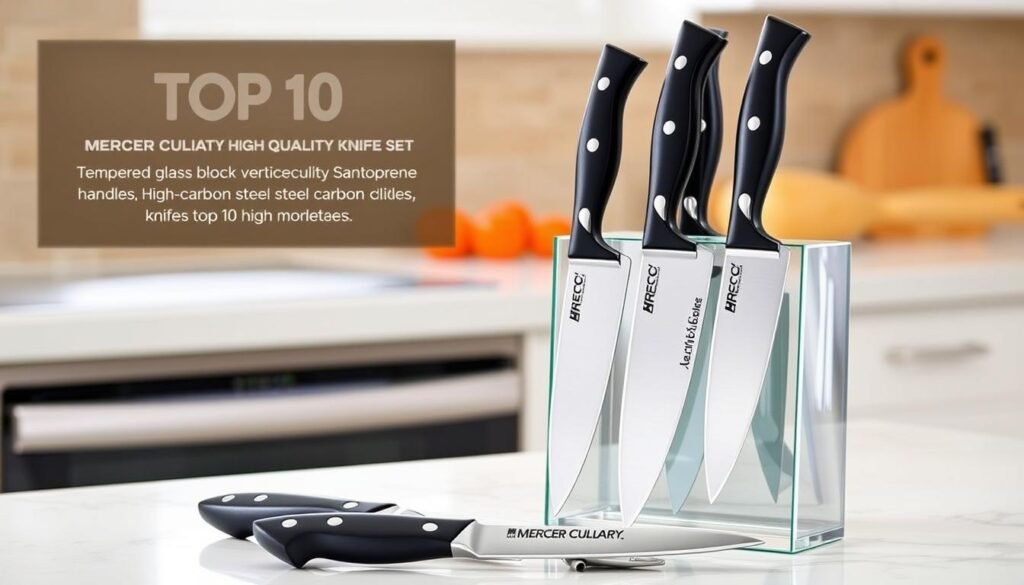
The Mercer Culinary Genesis 6-Piece set offers professional quality at an accessible price point. This set includes an 8-inch chef’s knife, 8-inch bread knife, 6-inch boning knife, 5-inch utility knife, and 3.5-inch paring knife, all housed in an innovative tempered glass block that displays the blades beautifully. The high-carbon German steel blades and comfortable Santoprene handles make this set a favorite among culinary students.
- Excellent value for forged knives
- Unique tempered glass block display
- Non-slip Santoprene handles
- Full tang construction for balance
- NSF certified for professional use
- No honing rod included
- Glass block shows fingerprints easily
- Not as refined as premium brands
Henckels International Statement 12-Piece Knife Set
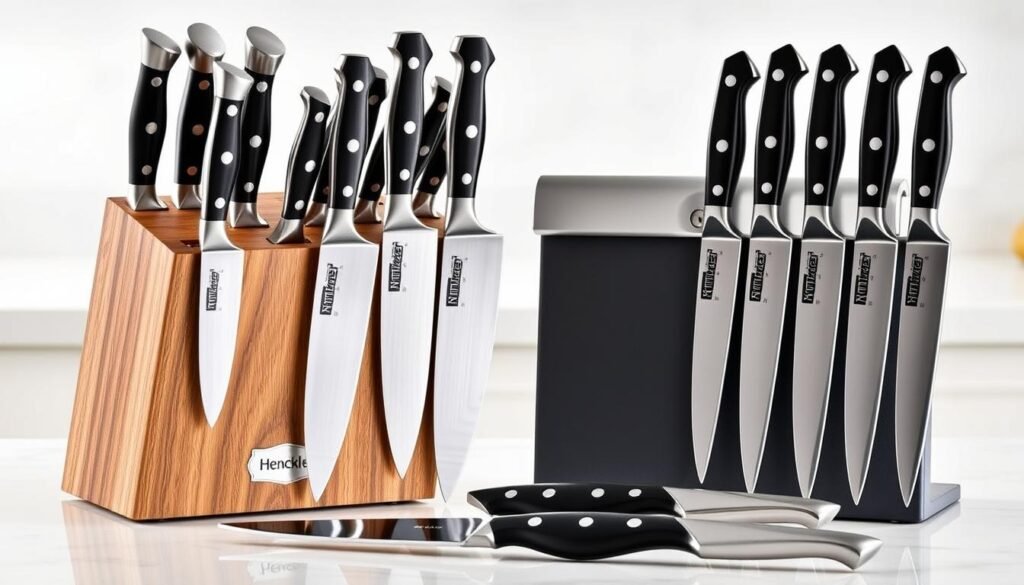
The Henckels International Statement 12-Piece set offers exceptional value for families who entertain. This comprehensive set includes an 8-inch chef’s knife, 7-inch santoku knife, 8-inch bread knife, 5-inch serrated utility knife, 3-inch paring knife, six 4.5-inch steak knives, a honing steel, and a hardwood block. The satin-finished stainless steel blades and ergonomic handles make this set both functional and attractive.
- Excellent value for a 12-piece set
- Includes six quality steak knives
- Good variety of kitchen knives
- Lightweight and easy to handle
- Attractive hardwood block
- Stamped rather than forged blades
- Handles feel somewhat unfinished
- No kitchen shears included
Cangshan Thomas Keller Signature 3-Piece Knife Set
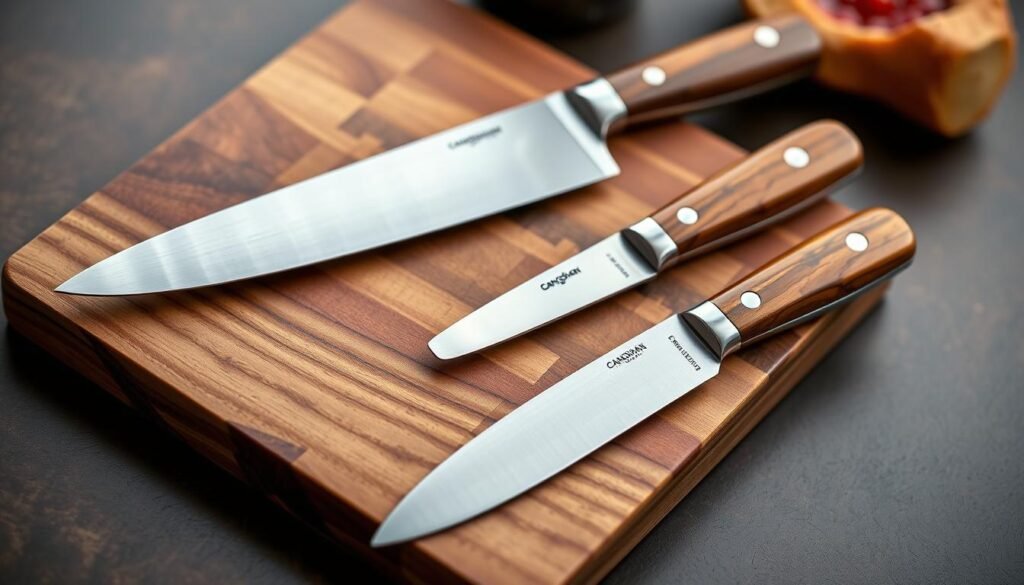
Designed in collaboration with Michelin-starred chef Thomas Keller, this 3-piece set represents the pinnacle of knife craftsmanship. The set includes an 8-inch chef’s knife, 9-inch bread knife, and 6-inch utility knife, each crafted from Swedish Damasteel with beautiful walnut handles. These knives combine exceptional performance with stunning aesthetics for the discerning chef.
- Premium Swedish Damasteel construction
- Designed by Michelin-starred chef Thomas Keller
- Beautiful walnut wood handles
- Exceptional balance and ergonomics
- Stunning aesthetics
- Premium price point
- Limited to three knives
- No storage block included
How to Choose the Right High-Quality Knife Set
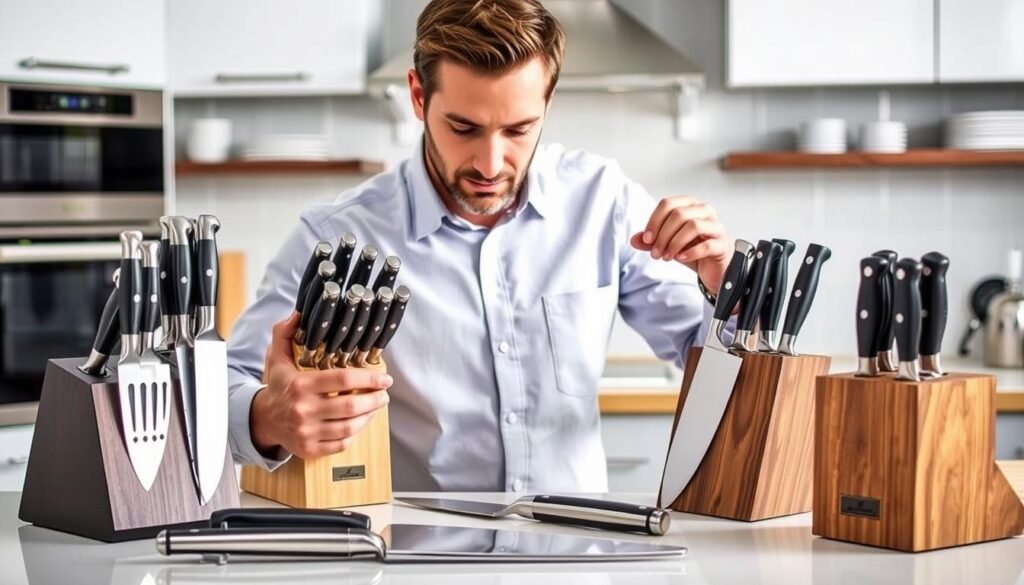
Selecting the perfect knife set for your kitchen involves considering several important factors. Here’s what to look for when evaluating high-quality knife sets:
Essential Knives
At minimum, a good knife set should include:
- Chef’s knife (8-10 inches)
- Paring knife (3-4 inches)
- Utility knife (5-6 inches)
- Bread knife (8-10 inches)
Additional specialized knives like santoku, boning, or carving knives are nice to have but not essential for most home cooks.
Blade Material
The blade material significantly impacts performance:
- High-carbon stainless steel: Excellent edge retention with corrosion resistance
- Damascus steel: Multiple layers of steel for strength and beauty
- VG-10/VG-MAX: Japanese steel known for exceptional sharpness
- German steel: Durable and easier to maintain
Construction Method
How a knife is made affects its performance:
- Forged: Hammered from a single piece of steel; typically heavier with a bolster
- Stamped: Cut from a sheet of steel; typically lighter and less expensive
- Full tang: The blade extends through the handle for better balance and strength
- Partial tang: The blade extends only partially into the handle
Handle Material & Comfort
The handle should feel comfortable and secure:
- Wood: Traditional, beautiful, requires more maintenance
- Pakkawood: Composite material that combines wood’s beauty with plastic’s durability
- Polymer/Plastic: Durable, easy to clean, often dishwasher safe
- Stainless steel: Modern look, very durable, can be slippery when wet
Balance & Weight
Personal preference plays a big role:
- German-style: Heavier, more substantial feel
- Japanese-style: Lighter, more nimble
- Balance point: Should feel natural in your hand
- Handle weight: Should counterbalance the blade
Storage Options
Consider how you’ll store your knives:
- Knife block: Convenient countertop storage
- Magnetic strip: Space-saving wall storage
- In-drawer block: Keeps counters clear
- Individual sheaths: Protects blades when stored in drawers
Care and Maintenance of High-Quality Knife Sets
Proper care and maintenance are essential to preserve the performance and longevity of your high-quality knife set. Follow these guidelines to keep your knives in optimal condition:
Cleaning
- Always hand wash knives with mild soap and warm water
- Never put quality knives in the dishwasher
- Dry immediately after washing to prevent water spots and corrosion
- Clean wooden handles with a damp cloth, not soaking water
- For stubborn food residue, use a soft brush rather than abrasive sponges
Sharpening & Honing
- Hone regularly (before or after each use) to maintain alignment
- Sharpen knives 2-4 times per year depending on use
- Use whetstones for Japanese knives (15-17° angle)
- Use sharpening systems for Western knives (20° angle)
- Consider professional sharpening for expensive knives
Storage
- Never store loose in drawers where blades can knock together
- Use knife blocks, magnetic strips, or blade guards
- Ensure knives are completely dry before storing
- Store in a location away from heat sources and sunlight
- Position edges up in blocks to reduce dulling
What to Avoid
- Cutting on glass, stone, or metal surfaces
- Using knives to pry open containers
- Cutting frozen foods with fine-edged Japanese knives
- Scraping food with the blade edge (use the spine)
- Leaving knives soaking in water or with acidic foods
Frequently Asked Questions About High-Quality Knife Sets
How much should I expect to spend on a high-quality knife set?
Frequently Asked Questions About High-Quality Knife Sets
How much should I expect to spend on a high-quality knife set?
Quality knife sets range widely in price, typically from 0 to
Frequently Asked Questions About High-Quality Knife Sets
How much should I expect to spend on a high-quality knife set?
Quality knife sets range widely in price, typically from $150 to $1,000+. For most home cooks, a set in the $200-$400 range offers an excellent balance of quality and value. Premium sets above $500 often feature specialized materials or craftsmanship that appeal to enthusiasts and professional chefs. Remember that a smaller set of high-quality knives is generally better than a larger set of mediocre ones.
Are Japanese or German knives better?
Neither is inherently “better” – they have different characteristics that suit different cooking styles. Japanese knives typically feature harder steel (60+ HRC), thinner blades, and sharper edges (15° angle), making them excellent for precision tasks and slicing. German knives usually have softer steel (56-58 HRC), thicker blades, and more robust edges (20° angle), making them more durable for heavy-duty tasks. Many chefs prefer Japanese knives for vegetables and precision work, and German knives for tougher tasks.
How often should I sharpen my kitchen knives?
This depends on usage frequency and the type of knife. For typical home use:
- Honing: Use a honing steel before or after each use to maintain the edge
- Sharpening: Most home cooks should sharpen their knives 2-4 times per year
- Professional sharpening: Consider professional service annually for expensive knives
Japanese knives with harder steel may hold an edge longer but can be more difficult to sharpen properly. German knives may need more frequent sharpening but are generally easier to maintain.
What’s the minimum number of knives I really need?
For most home cooks, three essential knives can handle 90% of kitchen tasks:
- Chef’s knife (8-10″): The all-purpose workhorse for chopping, slicing, and dicing
- Paring knife (3-4″): For detailed work, peeling, and small tasks
- Serrated bread knife (8-10″): For bread, tomatoes, and foods with tough exteriors
Additional knives like utility knives, santoku knives, or boning knives can be added as your needs evolve.
Are knife sets with built-in sharpeners worth it?
Generally, knife blocks with built-in sharpeners are not ideal for high-quality knives. These sharpeners typically use carbide or ceramic wheels that remove excessive material and can create uneven edges. They may be convenient, but they often shorten the lifespan of good knives. For quality knife sets, it’s better to learn proper sharpening techniques using whetstones or invest in a quality manual or electric sharpener specifically designed for fine cutlery.
,000+. For most home cooks, a set in the 0-0 range offers an excellent balance of quality and value. Premium sets above 0 often feature specialized materials or craftsmanship that appeal to enthusiasts and professional chefs. Remember that a smaller set of high-quality knives is generally better than a larger set of mediocre ones.
Are Japanese or German knives better?
Neither is inherently “better” – they have different characteristics that suit different cooking styles. Japanese knives typically feature harder steel (60+ HRC), thinner blades, and sharper edges (15° angle), making them excellent for precision tasks and slicing. German knives usually have softer steel (56-58 HRC), thicker blades, and more robust edges (20° angle), making them more durable for heavy-duty tasks. Many chefs prefer Japanese knives for vegetables and precision work, and German knives for tougher tasks.
How often should I sharpen my kitchen knives?
This depends on usage frequency and the type of knife. For typical home use:
- Honing: Use a honing steel before or after each use to maintain the edge
- Sharpening: Most home cooks should sharpen their knives 2-4 times per year
- Professional sharpening: Consider professional service annually for expensive knives
Japanese knives with harder steel may hold an edge longer but can be more difficult to sharpen properly. German knives may need more frequent sharpening but are generally easier to maintain.
What’s the minimum number of knives I really need?
For most home cooks, three essential knives can handle 90% of kitchen tasks:
- Chef’s knife (8-10″): The all-purpose workhorse for chopping, slicing, and dicing
- Paring knife (3-4″): For detailed work, peeling, and small tasks
- Serrated bread knife (8-10″): For bread, tomatoes, and foods with tough exteriors
Additional knives like utility knives, santoku knives, or boning knives can be added as your needs evolve.
Are knife sets with built-in sharpeners worth it?
Generally, knife blocks with built-in sharpeners are not ideal for high-quality knives. These sharpeners typically use carbide or ceramic wheels that remove excessive material and can create uneven edges. They may be convenient, but they often shorten the lifespan of good knives. For quality knife sets, it’s better to learn proper sharpening techniques using whetstones or invest in a quality manual or electric sharpener specifically designed for fine cutlery.
Are Japanese or German knives better?
How often should I sharpen my kitchen knives?
What’s the minimum number of knives I really need?
Are knife sets with built-in sharpeners worth it?
Conclusion: Investing in the Right High-Quality Knife Set
A high-quality knife set is one of the most important investments you can make for your kitchen. The right knives not only make food preparation safer and more efficient but can actually make cooking more enjoyable. When selecting from among the top 10 high-quality knife sets we’ve reviewed, consider your cooking style, budget, and specific needs.
Our Editor’s Choice, the Zwilling J.A. Henckels Professional S 7-Piece set, offers an exceptional balance of quality, versatility, and value that will serve most home cooks beautifully. However, each set in our guide has unique strengths that might make it the perfect choice for your kitchen.
Remember that proper care and maintenance are essential to preserving your investment. With regular honing, occasional sharpening, and proper storage, a high-quality knife set can provide decades of reliable service and make every cooking task more precise and enjoyable.